Hello,Welcome to Zhengzhou fenglan boiler co., LTD !

7*24 hours Hotline : +8613526427771
Southeast Asia sales calls:+66890892025

首页 > Waste heat boiler

Waste heat boiler

Waste heat boiler

  • </li>

Product categories: Waste heat boiler

Product keywords:Waste heat boiler

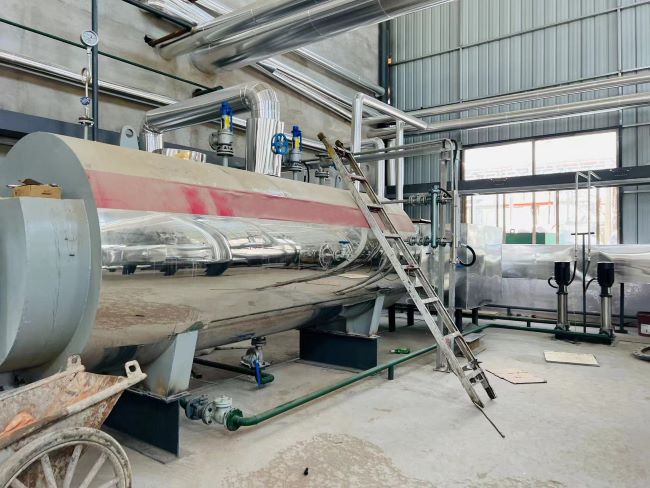
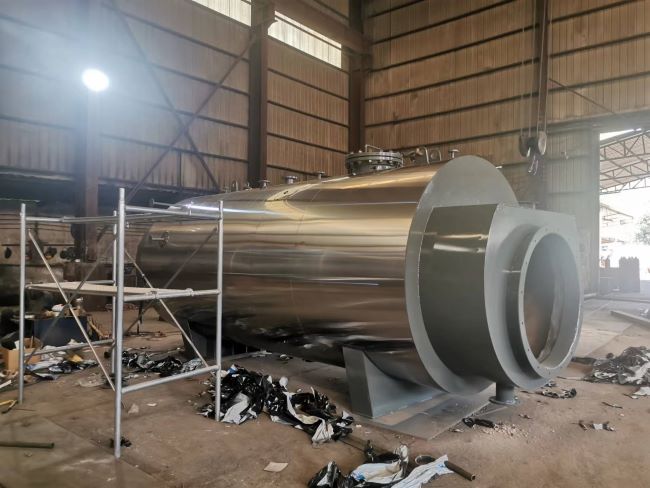
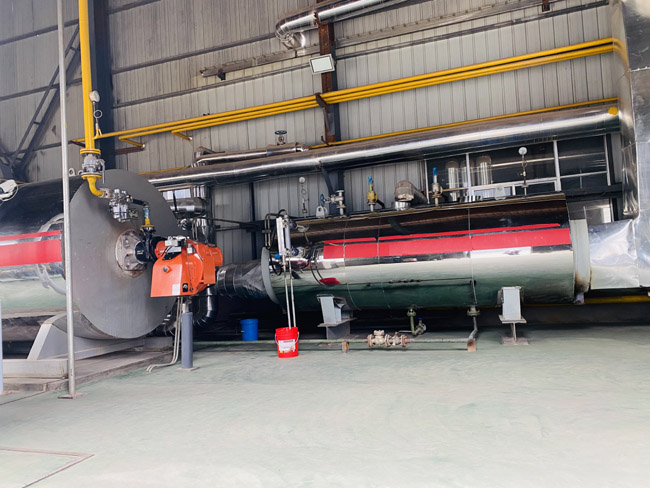
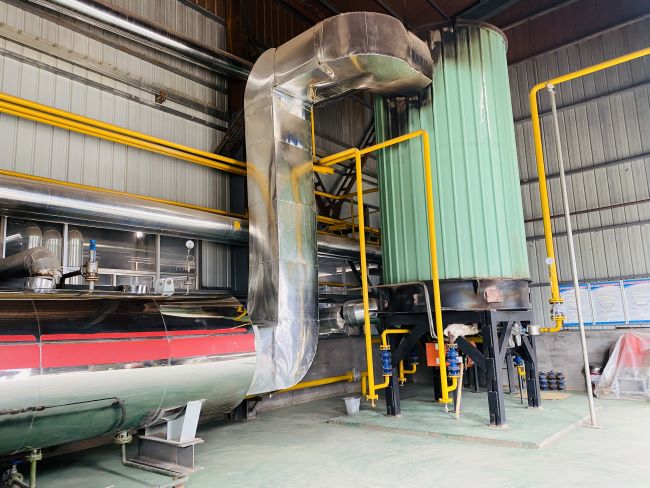
Introduction:The waste heat boiler is an auxiliary equipment for comprehensive utilization of industrial furnace waste heat. It is generally installed in the flue to absorb the waste heat (or waste heat) of the exhaust gas to generate steam and reduce the temperature of the flue gas. ...

Telephone:+8613526427771

Southeast Asia sales calls:+66890892025



Product introduction


The waste heat boiler is an auxiliary equipment for comprehensively utilizing the waste heat of industrial furnaces. It is generally installed in the flue to absorb the waste heat (or waste heat) of the exhaust gas to generate steam and reduce the temperature of the flue gas. If no induced draft fan is installed, when the waste heat boiler is placed, its total resistance should be less than the chimney draft. If there is an induced draft fan, since the induced draft fan can only withstand the temperature below 250°C, the flue gas temperature should be lowered to below 250°C, and a waste heat boiler must be installed to ensure the safe operation of the entire heating furnace system. If the waste heat boiler fails during operation and there is no bypass flue, it will affect the normal operation of the heating furnace.
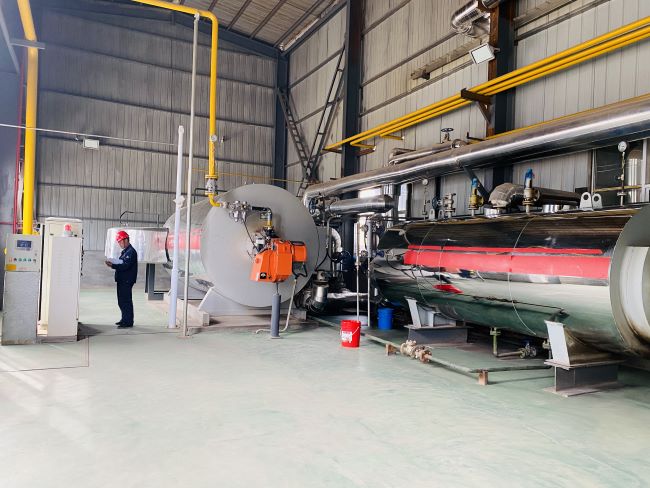
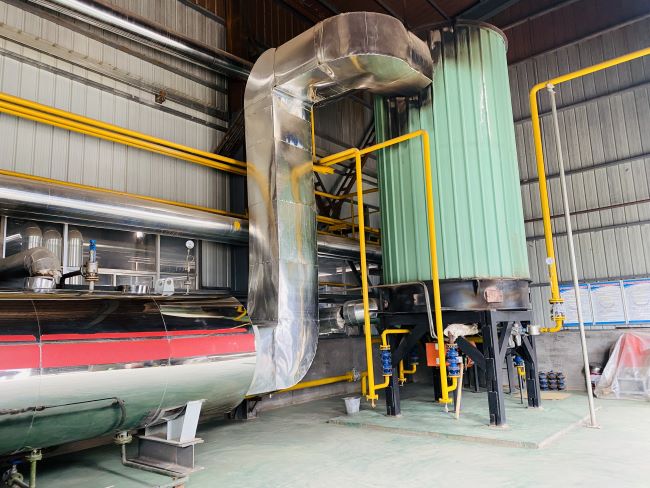
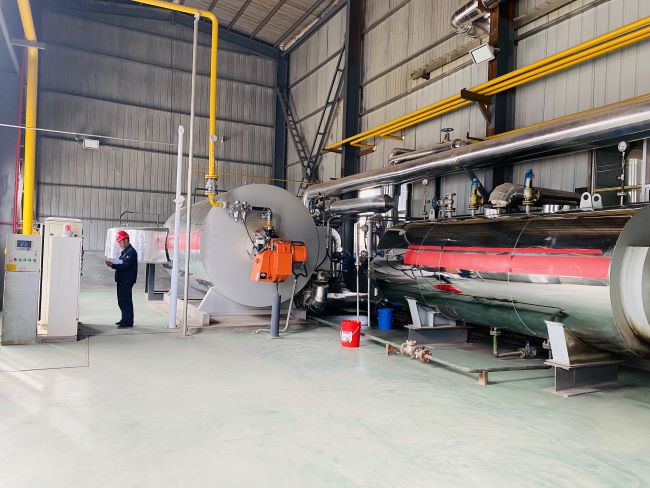
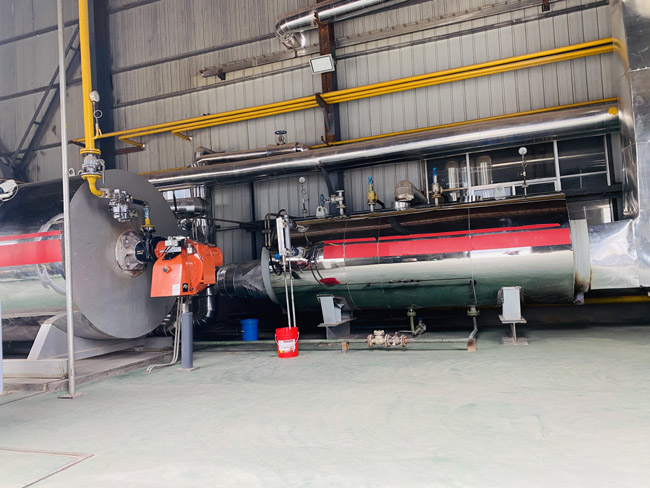
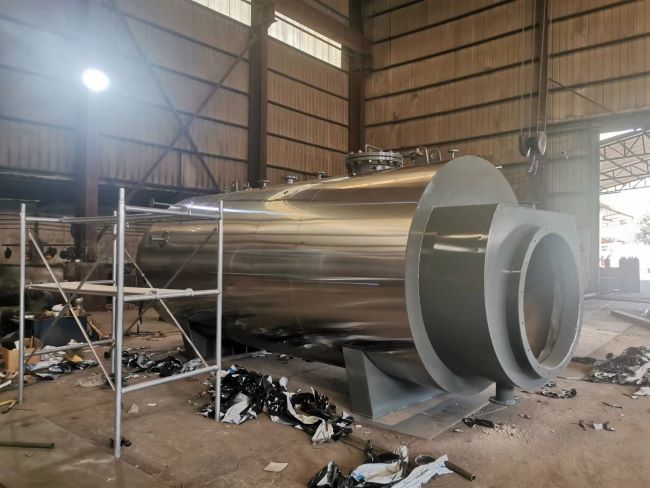
The difference between the waste heat boiler and the general boiler is that the waste heat boiler does not need fuel, but uses the waste heat of the flue gas to generate steam. Therefore, although the one-time investment is relatively large, if the steam can be fully utilized, the investment will be the most. It can be recovered within 4-6 months. Compared with ordinary boilers, the required heating area is much larger than that of ordinary boilers because the flue gas temperature of waste heat furnace is low.
Waste heat boilers also have the following characteristics:
1. The heat load is unstable and will change with the production cycle.
2. The dust content in the flue gas is large.
3. The flue gas is corrosive.
4. The installation of the waste heat boiler will be limited by site conditions, and there are also problems of how to cooperate with the previous process and so on.
Second,  the structure of the waste heat boiler
1. According to the circulation system, there are two types: forced circulation and natural circulation. The former requires more electricity, more equipment, and higher operating costs, so it is less used now.
2. According to the form of heating surface, there are mainly two types: smoke tube boiler and water tube boiler. The former has flue gas inside the pipe and water outside the pipe, while the latter is the opposite. From comprehensive considerations, water tube boilers are generally used in the form of water tube boilers.
3. From the perspective of water pipe structure, there are row pipe type, serpentine pipe type, double steam drum elbow type, straight pipe type, inclined pipe type and so on. In addition, there is a heat pipe waste heat boiler, in which there is a special liquid in the tube, and the vacuum is drawn, and the upper part of the flue gas outside the tube heats the water in the steam drum in the steam drum. This time we are using the straight tube waste heat boiler, which is simple in structure, easy to manufacture, and easy to operate and manage.
three, Introduction to waste heat boiler system flow Steam
drum → downcomer → row tube heat receiver → ascending tube → steam drum (after water consumption, the feed water pump replenishes water supply)
4.  The heating surface is composed
of φ89, φ108, φ133, φ159 pipes, a total of six groups, Each group weighs about 2350kg, with a heating surface of about 88m2, and a total weight of 14100kg, with a heating surface of about 530 m2 (see the piping diagram), which can produce steam of 0.4-0.6MPa and 4-5t/h of saturated steam (when the production is normal).
5.  Steam drum accessories and functions
1. Water level gauge—①It is a safety accessory used to reflect the internal liquid level of the steam drum. 2 only.
2. Pressure gauge——② Indicates the pressure inside the steam drum. It is an important safety accessory. A qualified and calibrated pressure gauge must be installed, and it is generally calibrated once every 0.5 to 1 year. 2 only. It is necessary to install a buffer elbow and a pressure gauge cock for easy operation and replacement of the pressure gauge.
3. Safety valve——③Ensure that the system operates under a certain pressure. When the pressure is higher than the specified value, it can be opened in time to discharge steam, and when the pressure drops to the specified value, it can be automatically closed. It is a very important safety accessory. Vertically installed at the highest position, the total area of ​​the discharge pipe is 1.25 times that of the safety valve, which needs to be verified by the labor department. The opening pressure is 0.2, 0.4kg/cm2 higher than the set pressure. 2 pieces. According to the requirements, a drain pipe must be installed at the lower part of the exhaust nozzle of the safety valve.
4. Drain valve——to discharge the air in the steam drum and discharge excess steam, mainly used for starting and stopping the furnace.
5. Main steam valve - the steam generated by the main steam valve is supplied to the steam distributor for users. It can be adjusted automatically or manually.
6. Drainage valve——④ There are two kinds of blowdown valves: regular and continuous blowdown. The function is to drain the water in the furnace. In order to ensure the safety of operation during operation, the high-concentration furnace water is drained according to the quality requirements of the furnace water to keep the furnace water normal. At least 2 blowdown valves should be installed on the same steam drum.
7. Water supply device——⑤ Supply enough qualified soft water to the steam drum at any time. There are two types of intermittent water supply and continuous water supply to keep the water level at a normal level. (1, 2, 3, 6, and 7 are called the five major safety accessories. If one of them is damaged and fails, the furnace must be shut down immediately.
8. High and low water level, high and low pressure alarm device - when the water level and steam pressure are higher than or When the value is lower than the specified value, an alarm will be issued to remind the on-duty personnel to pay attention to avoid accidents and be careful not to close it. Sixth, the
internal  device of the steam drum
1. Slot-type baffle: the steam-water mixture in the rising pipe enters the steam drum and impacts on the steel plate to eliminate the impact Dynamic kinetic energy is also a primary separation element, which initially separates the water vapor, and the water flows downward and upward.
2. Steam-water separation device: it is an important device for separating steam and water. Changing the direction several times, the water drop falls and the steam goes up.
3. Water supply pipe: distribute the water supply evenly in the steam drum, so that the flow of water in the steam drum will not change due to uneven cold and heat.
4. Surface sewage pipe; regular sewage discharge To ensure that the boiler runs well and the boiler water is normal, the number of sewage discharges is determined according to the test situation of the boiler water
. The water in the downpipe can fill the entire water pipe without forming a vortex.
7.  Water quality and water quality treatment
Waste heat boiler feed water requirements: meet the water quality requirements of low-pressure boilers.
Generally, rivers, rivers and lakes contain impurities, dirt and various salts Such substances, especially in seawater, have a greater salt content, among whichSalts of Ca+ and Mg+ ions are easy to form carbonates that will precipitate after being heated, forming scale. Its thermal conductivity is very poor. Although there is water flowing, it cannot take away the heat of the pipe from the flue gas, which makes the temperature of the outer wall of the pipe rise, causing the pipe to burn out, bend, crack, and shorten the life. In addition, it will cause corrosion: chemical corrosion, oxygen corrosion, etc. will have adverse effects on the heating surface and the inner wall of the steam drum, so the boiler feed water must be softened. For boilers with a steam production greater than 10t/h, the feed water It is best to deoxygenate. The softening water treatment equipment we use is TMFB automatic softener, a complete set of 2 sets, which can automatically complete the reduction and regeneration process and run automatically. It can produce 10t/h of soft water per hour, and the hardness of the outlet water is ≤1.5PPM, which can fully meet the requirements of low-pressure boiler feed water quality.
The basic principle of the softener is: hard water (tap water, etc., if there are too many suspended solids in it, it must pass through a filter before entering the softener.) After entering the softener after reduction, Ca+, Mg+, etc. in hard water are prone to scale . The substance is replaced by the Na+ ions contained on the surface of the 732# cationic resin in the softener, that is, the Ca+ and Mg+ ions are adsorbed by the 732# cationic resin, and the Na+ ions adsorbed on its surface enter the water, making the hard water into a solvent that can generate Na+ salt of salt, this kind of water that does not generate scale is called soft water. After the 732 resin is used for many times, when the Na+ ions on the surface cannot be continuously replaced, the softener will fail. At this time, the softener must It can only be used after restoration and regeneration.
Reduction regeneration mainly uses Nacl solution to pass through the invalid 732 resin layer (if there is garbage, it needs to be filtered), and uses Na+ ions in Nacl to replace Ca+, Mg+ and other ions on the surface of 732 resin that are easy to form insoluble scale. After continuous flushing (some methods are soaking for 2 hours), forward flushing, backflushing, and sewage discharge are performed many times, and the replaced water with Ca+ and Mg+ ions is discharged into the ditch. After this process 732 resin reduction and regeneration, it can continue to be used. Two sets of equipment, one for use and one for standby, fully automatic control. Usually, just pay attention to adding salt (no garbage) at any time. The concentration of salt is generally about 6-8° (according to the concentration of Mei's saline). Salt consumption can be saved.
Since we use cations to treat soft water, the furnace water has a certain degree of alkalinity (sodium salt is decomposed into NaOH by heat). Generally, the alkalinity of the furnace water is controlled at 400-600PPM, and the chlorine root is controlled below 400PPM. If the root is too high, it can be controlled by increasing the sewage discharge, or opening some surface sewage valves slightly. In short, it is necessary to ensure that the boiler water is within the specified range for safe operation. "1 milligram equivalent/liter = 50PPM"
8. Pressure test
After the waste heat boiler is installed, or after each overhaul, a hydraulic test must be carried out. The water pressure test is stipulated as: when
the working pressure is ≤0.6MPa, the test pressure is 1.5P; when
the working pressure is 0.6~1.2MPa, the test pressure is = working
pressure + 0.3MPa; pressure.
During the test, when the water pressure rises to about 0.3MPa, first stop the boost. When there is no leakage after inspection, continue to increase to the test pressure, keep the pressure for at least 5 minutes without leakage, and then reduce the pressure to the working pressure. Check all welding, flange joints, manhole covers, etc. in detail, and stop when there is no leakage.
9.
After the waste heat boiler is installed, in order to remove the rust, oil, impurities and scale on the inner surface of the system pipe, it is best to carry out chemical cleaning and cooking before starting the furnace.
Generally, the cooking furnace needs to be carried out by adding medicine, that is, adding alkali and trisodium phosphate. Generally, 2-5kg is added to each cubic furnace water . (Depending on the situation of rust, etc.)
If there is less rust and there are few impurities such as oil stains, it is not necessary to add medicine to cook the stove.
The process is to add medicine (or not add medicine) and add soft water to the middle water level at the same time. During the heating process, the pressure is slowly increased to the working pressure, and the sewage is drained and the water is changed several times, so that the boiler water can finally reach the standard state. This total process takes about 24 hours.
Notice:
1. Pay attention to the expansion of each part of the waste heat furnace during the cooking process, and keep the water level normal.
2. Apply soft water during water replenishment and water change, and proceed slowly.
3. Every 3 to 4 hours, take a sample to analyze the alkalinity and chlorine in the water. If it has become normal, the cooking is over.
10. Pickling and
descaling After many years of use of the row-pipe waste heat boiler, if there is thick scale on the inner wall of the row pipe, the scale removal work should be carried out. The waste heat boiler can only be cleaned chemically. You can ask a special team to do it, or you can do it yourself when the work is shut down for maintenance. The specific process is as follows: 1. Preparation of hydrochloric acid solution: when the scale thickness is 1mm, the concentration of hydrochloric acid solution is
4
.
When the scale thickness is 2mm, the concentration of hydrochloric acid solution is 5%, and the concentration shall not exceed 5%
① Calculate the total volume of the entire waste heat boiler: that is, including the sum of the volume of the steam drum, exhaust pipe, ascending and descending pipe.
② Example: If the total volume is 10 tons and the scale thickness is 1mm, industrial hydrochloric acid is required = 10000 kg × 4% ÷ 31% ≈ 1300 kg 2. "02 Corrosion Inhibitor" formula: ①
Add
a Part "02 Corrosion Inhibitor"
② "02 Corrosion Inhibitor" formula and preparation sequence: put 20 kg of boiling water in the tank → add 1 kg of industrial hydrochloric acid → add 1 kg of aniline → finally add 1 kg of formaldehyde, during the entire preparation process , must be added slowly and continuously stirred with a wooden stick until the color is brownish red.
③ Take the above as an example: the amount of "02 corrosion inhibitor" required in 1300 kg of industrial hydrochloric acid is 1300÷300≈4.3 parts. That is, boiling water 20×4.3=86 kg→4.3 kg of industrial hydrochloric acid→4.3 kg of aniline→4.3 kg of formaldehyde.
Note: When preparing "02", the order must not be mistaken.
3. Pickling process:
① Drain the water in the steam drum and drain pipe.
② Open the manhole door and remove the garbage and impurities in the steam drum.
③ Remove the safety valve and release valve, connect the heating steam pipe and the φ2" rubber pipe at the outlet of the circulation pump to the steam drum from the second interface and fasten it firmly, then close the manhole door. ④ Take two large and small
cylinders in advance and bury them in the ground , connect the circulating pump (pump the acid liquid from the cylinder into the steam drum, connect the φ2" rubber pipe from the drain outlet of the
drain pipe to the cylinder. , slowly add industrial hydrochloric acid into the tank, and slowly add the prepared "02 corrosion inhibitor" into the tank with a small spoon until the industrial hydrochloric acid and "02 corrosion inhibitor" are lightened at the same time. ⑥ Constantly adjust the liquid in the
tank ⑦
During the circulation process, use the titration method (phenolphthalein test solution) to measure the concentration of hydrochloric acid. If the concentration does not change, it means that the scale has been removed (the whole cycle process is about 4 hours). The whole process
⑧ Drain all the liquid, open the manhole door, rinse the steam drum with tap water, and remove the sundries in the steam drum Use a circulation pump to repeatedly wash away the garbage and dirt in the exhaust pipes.⑨Prepare
0.3% soda ash solution, the same as pickling, circulate for 1 to 2 hours, then let off the alkali solution, then clean the steam drum, and circularly wash the dirt in each exhaust pipe , until it is cleaned.⑩
Restored to its original state, ready to be put into use.

previous:no article
Next:no article
Recommended products /Products