Hello,Welcome to Zhengzhou fenglan boiler co., LTD !

7*24 hours Hotline : +8613526427771
Southeast Asia sales calls:+66890892025
7*24 hours Hotline : +8613526427771
Southeast Asia sales calls:+66890892025
zhengzhou fenglan boiler co., LTD
tel:+8613526427771
Overseas sales hotline:+66890892025
E-mail:fenglan@guolu.vip
382620615@qq.com
Address:Zhengzhou, Henan, China
 WeChat
Anti-corrosion wood can be used directly in the environment that is in contact with water and soil. It is the material of choice for outdoor wood floors, garden landscape floors, outdoor wooden platforms, terrace floors, outdoor wooden planks and other outdoor anti-corrosion wood pergola. Qualified preservative wood can withstand the long life of outdoor wind and sun, which is related to its processing process.
There are many types, such as the most commonly used anti-corrosion wood of sylvestris pine, southern pine anti-corrosion wood, Douglas fir anti-corrosion wood, eucalyptus anti-corrosion wood, pineapple grid anti-corrosion wood, etc. Anti-corrosion wood is wood processed (sawing and anti-corrosion
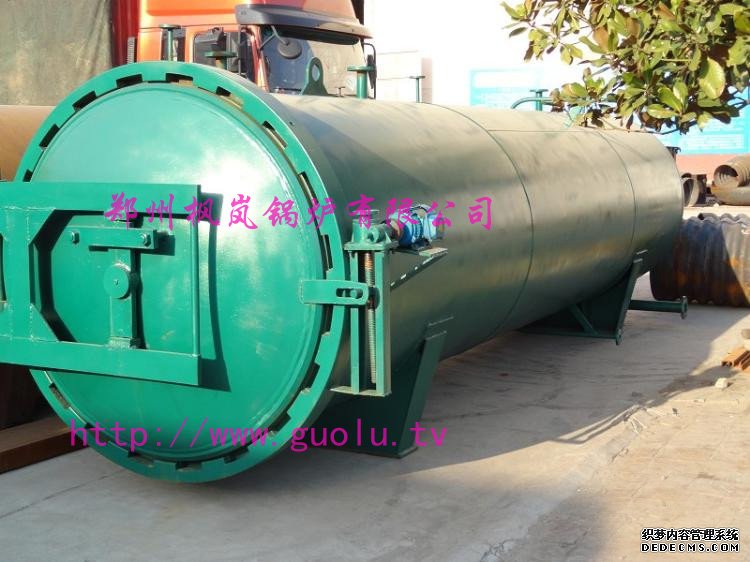
) After treatment, it is put into a closed pressure anti-corrosion tank, and the anti-corrosion agent is pressed into the interior of the wood with vacuum pressure. The preservative penetrates into the cell tissue of the wood and can be tightly combined with the wood fiber to achieve the purpose of anti-corrosion. The wood itself is also specially screened in order to allow the preservatives to enter the wood effectively. For example, wood such as European scotch pine can be closely combined with preservatives, so it can be used for a long time, which can reach 30 years. Preservatives are used to infiltrate and solidify the wood so that the wood has the function of preventing decay fungus and biological invasion. At present, preservatives mainly include CCA, ACQ, and CAB. The main component of CCA is copper arsenic, the main component of ACQ is ammonia-soluble alkylamine copper, and the main component of CAB is copper file.
The production process of preservative wood:
1. According to the production process, the liquid medicine is prepared in the mixing tank, and the medicine is put into the medicine storage tank for use.
2. According to product specifications, materials are obtained, selected and planed on all sides, loaded into the feeder, open the tank door, push the moving platform to connect with the inside of the tank, push the feeder into the tank, close the tank door, vacuum work, absorb liquid, replenish liquid , pressurization, frequency pressure, pressure relief, liquid return, vacuum, pressure relief, open the tank door (after the pressure is relieved), discharge, and inspection.
Vacuum/high-pressure impregnation process
1. Preparation of medicinal solution: The medicinal solution is prepared by the stirring tank, and then injected into the liquid storage tank. The medicinal solution in the liquid storage tank is thickened or lightened as required.
2. Feeding: first put the processed bamboo and wood into the tank, then close the tank door and close it tightly. The specific operation is as follows:
(1). First, try to close the tank door, observe whether the upper, lower, left, and right planes of the tank door flange and the hoop ring of the tank body are parallel and adjust them in time;
(2) After confirming the parallelism, start the hydraulic system and screw the clamp ring (note: make sure the tank door flange matches the tank body clamp ring, and check whether the travel switch on the screw mechanism is intact before starting the hydraulic pressure. 3. Vacuum
operation: After the tank door is closed, open the vacuum valve and close all other valves to start the vacuum operation and keep the vacuum. 4.
Pressurization: After the vacuum operation, use negative pressure to suction Liquid, pressurized according to different materials and standards.