

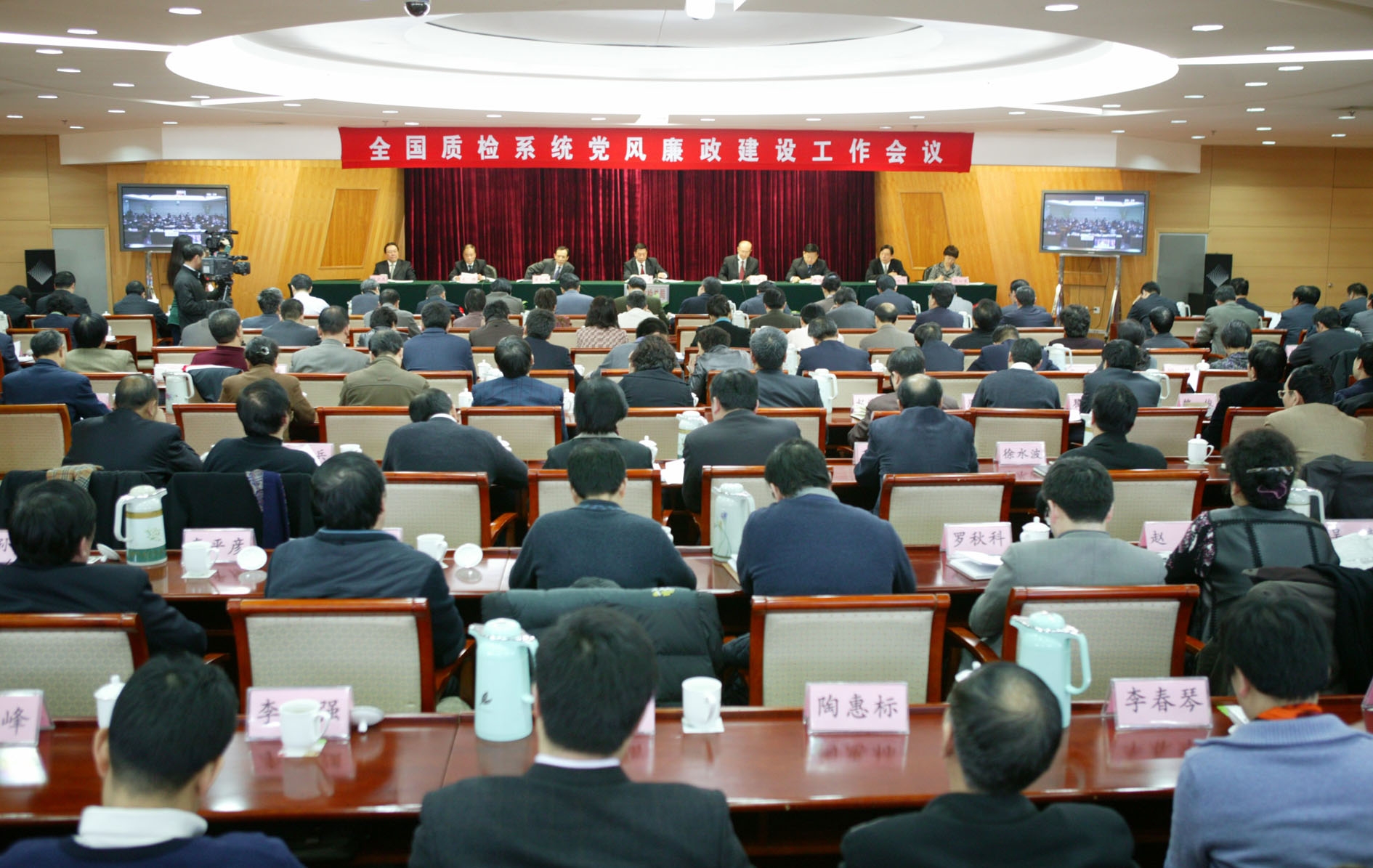
On March 12, the General Administration of Quality Supervision, Inspection and Quarantine held a seminar on the safety of special equipment for major events in Shanghai to discuss how to increase the safety supervision of special equipment during the Shanghai World Expo, effectively eliminate hidden dangers of accidents, improve emergency management capabilities, and ensure the safety of special equipment for the World Expo .
Beijing Municipality, Heilongjiang Province, and Shandong Provincial Quality Supervision Bureau exchanged experience in the safety assurance of special equipment for major events such as the Olympic Games, the Great Winter Games, and the National Games at the seminar. Guangdong also introduced the safety assurance work plan. Participants also inspected the security of special equipment in the Expo venues on the spot.
Participating in the seminar were the Special Bureau of the General Administration of Quality Supervision, Inspection and Quarantine, the China Special Inspection Institute, and relevant personnel from the quality supervision systems of Beijing, Heilongjiang, Shanghai, Shandong, Guangdong, Zhejiang, Jiangsu and other provinces and municipalities directly under the Central Government.
According to the Shanghai Quality Supervision Bureau, the total number of special equipment currently in use in Shanghai has reached 370,000 units (sets), with another 11,000 kilometers of pressure pipelines and more than 4.39 million gas cylinders. In the Expo site, 927 sets of special equipment have been installed or are being installed, including 861 sets of elevators, 46 sets (sets) of hoisting machinery, 17 sets of boilers, 2 sets of pressure vessels, and 1 set of large-scale amusement facilities , 20 kilometers of pressure pipelines (the number of special equipment will increase as the construction progress of the park), and about 196 new energy vehicles will be put into use before the park opens. Due to the large quantity, variety, and high density, and the high-temperature climate during the operation of the World Expo, failures of various electromechanical equipment will become a frequent trend. How to ensure the safety and controllability of special equipment in use within 6 months, how to organize effective disposal and rescue of special equipment emergencies in flood seasons such as typhoons and storms and in parks with dense crowds and small spaces, Shanghai The municipal quality supervision system actively plans and prepares in advance.
It is understood that as early as 2007, the Shanghai Quality Supervision Bureau actively communicated with the World Expo Bureau to track and understand the special equipment that may be installed and used in the World Expo venues, and specially compiled the "2010 Shanghai World Expo Special Equipment Safety Management Service Guide" to introduce laws and regulations Regulations, handling procedures, consulting service methods, etc. will be submitted to the World Expo Bureau for exhibitors to understand, laying a good foundation for the follow-up security work. In 2008, in conjunction with the "600-day World Expo Action", the Shanghai Quality Supervision Bureau focused on the investigation and management of hidden dangers to keep abreast of and grasp the dynamics of special equipment in venues. At the end of the year, we studied and studied the experience of Beijing Olympic special equipment security work, learned from the Beijing Municipal Quality Supervision Bureau's Olympic special equipment security work plan, and combined with Shanghai's actual situation and the characteristics of the World Expo, determined the overall plan. Under the specific guidance of the bureau, the "2010 Shanghai World Expo Special Equipment Safety Guarantee Work Plan" was compiled and issued.
According to the guarantee scope and importance, the Shanghai Quality Supervision Bureau divides the Expo site into a 500-meter area around it, including the "core area" of the Expo Village, the downtown area of Shanghai outside the core area, the inner ring road of Pudong, and the west of Yanggao South Road and Chenggong District. The area north of the mountain road, Hongqiao Airport (including the transportation hub), Pudong Airport, and Shanghai South Railway Station are the "key areas", and the "peripheral areas" outside the two areas.
In the 100-day countdown, according to the principle of safety guarantee for special equipment of the World Expo, the Shanghai Quality Supervision Bureau once again carried out a full-coverage inspection of the special equipment in use, strengthened the supervision of the use link, thoroughly investigated and dealt with potential safety hazards, and strengthened the implementation of corporate responsibility as the core. Responsibility system construction; Take targeted measures for accident-prone equipment and weak links in supervision to reduce blind spots and dead ends in supervision.
In the work of risk assessment and classified supervision of special equipment in use, the Shanghai Quality Supervision Bureau actively applies risk management theory, based on the basic standards of classified supervision, and takes the assessment of hazard sources of special equipment in use as the starting point to continuously promote classified supervision Work. At the same time, the risk assessment work is closely combined with the administrative supervision work. According to the safety status of the special equipment of the evaluated unit, corresponding opinions are put forward, and safety supervision instructions are issued in a timely manner for the hidden dangers found in the evaluation. The special equipment in use by the unit is safe and controllable.
In terms of the implementation of the main responsibility for the safety of special equipment production and use units, the Shanghai Quality Supervision Bureau detailed the work and signed safety responsibility commitment letters at all levels; urged enterprises to revise and improve relevant emergency plans and technical rescue plans to ensure that the plans are effective and easy to use , know how to use; continuously improve the level of scientific, safe, timely and effective emergency rescue, and achieve rapid response, coordinated and orderly, scientific disposal